Abstract
Introduction
Bangladesh has limited free trade agreements (FTAs) or preferential trade agreements (PTAs). It has no fully reciprocal bilateral FTAs in force with individual countries (as of the latest available data around 2025–2026), but it participates in several regional/multilateral preferential arrangements and one bilateral PTA.
Signed and in effect (preferential/regional arrangements)
These provide tariff reductions or preferences on selected goods (not always full free trade):
- South Asian Free Trade Area (SAFTA): Afghanistan, Bhutan, India, Maldives, Nepal, Pakistan, Sri Lanka. Operational since 2006 (with phased tariff cuts; more limited for non-LDC members).
- Asia-Pacific Trade Agreement (APTA): China, India, Republic of Korea (South Korea), Lao PDR, Sri Lanka (Mongolia also associated in some references). Provides margins of preference on certain products.
- Trade Preferential System among the Member States of the Organization of Islamic Cooperation (TPS-OIC): Various OIC members (e.g., references include Cameroon, Egypt, Jordan, Malaysia, Pakistan, Syria, Tunisia, Turkey, UAE, and others that have ratified).
- Preferential Trade Agreement among D-8 Member States (D-8 PTA): Egypt, Indonesia, Iran, Malaysia, Nigeria, Pakistan, Turkey.
- Bangladesh-Bhutan Preferential Trade Agreement (BB-PTA): Bilateral PTA signed in December 2020 and implemented from July 2022. Grants duty-free access for 100 Bangladeshi products to Bhutan and 34 Bhutanese products to Bangladesh.
Bangladesh Customs lists these as the main preferential agreements providing tariff benefits.
Other FTAs
- BIMSTEC FTA (Bay of Bengal Initiative for Multi-Sectoral Technical and Economic Cooperation: Bangladesh, Bhutan, India, Myanmar, Nepal, Sri Lanka, Thailand): Framework signed, but full FTA negotiations/implementation not yet complete or fully operational.
- Older arrangements like SAPTA (predecessor to SAFTA) exist in historical context.
- Bangladesh has historically relied heavily on non-reciprocal LDC preferences (e.g., Everything But Arms in the EU, GSP schemes) rather than reciprocal FTAs. With LDC graduation approaching/ongoing challenges, it has been actively pursuing more deals.
Under negotiation, proposed, or in feasibility studies (not yet in force)
These include talks or studies with countries/blocs such as:
- Japan (EPA/Economic Partnership Agreement; some reports of substantial progress or agreement in principle around late 2025).
- South Korea (CEPA/comprehensive partnership).
- UAE (comprehensive economic agreement negotiations started).
- Singapore (FTA talks advanced).
- India (CEPA feasibility).
- Sri Lanka, Nepal, Pakistan (PTA/FTA negotiations).
- Others under study or discussion: China, Malaysia, Thailand, Turkey, Indonesia, Mauritius, Nigeria, New Zealand, EU, and more.
In short, the active preferential partners through existing agreements are mainly the SAFTA and APTA members, D-8 and TPS-OIC participants, and Bhutan bilaterally. Bangladesh is expanding efforts post-LDC graduation to secure more reciprocal FTAs/CEPAs. For the most current status, official sources like Bangladesh’s Ministry of Commerce or Tariff Commission should be checked, as negotiations evolve.
Global Business Value Chains
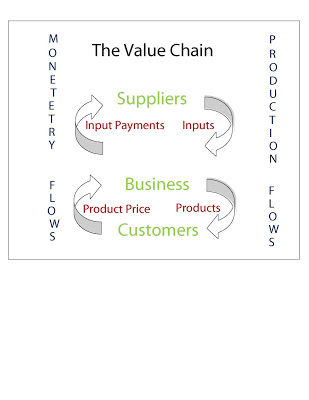
These preferential trade agreements (PTAs) and regional free trade arrangements (such as SAFTA, APTA, TPS-OIC, D-8 PTA, and the Bangladesh-Bhutan PTA) enhance global economic integration and supply chain management primarily by lowering trade costs, improving market access, facilitating intermediate goods flows, and supporting participation in global business value chains .
While Bangladesh’s existing agreements are mostly preferential (with limited product coverage and depth compared to comprehensive modern FTAs), they still deliver measurable benefits, especially for a manufacturing- and export-oriented economy like Bangladesh that relies heavily on imported inputs for sectors such as ready-made garments (RMG), textiles, leather, and pharmaceuticals.
Reduced tariffs and trade costs → lower production costs and higher efficiency
- Tariff reductions or margins of preference on selected goods lower the cost of importing raw materials, intermediate inputs, machinery, and components from partner countries (e.g., China, India, South Korea via APTA; regional partners via SAFTA).
- This directly cuts input costs for Bangladeshi manufacturers, improving price competitiveness of final exports.
- Lower barriers also reduce “service link costs” in fragmented production, making multi-country supply chains more viable.
Better integration into regional and global value chains (GVCs)
- Agreements promote backward GVC participation (using foreign value-added inputs in exports). Studies show SAFTA has increased foreign content in exports among South Asian economies, including flows from India and Pakistan into Bangladesh.
- Preferential access encourages firms to source intermediates regionally rather than from more distant, higher-cost suppliers, shortening lead times and building regional production networks.
- Rules of origin (with regional cumulation in some agreements) allow inputs from partner countries to count toward origin requirements, enabling more flexible and efficient supply chain design.
Expanded market access and export growth
- Preferential tariffs in partner markets improve the competitiveness of Bangladeshi goods, supporting higher export volumes and diversification beyond traditional markets.
- Greater two-way trade strengthens commercial linkages, encourages long-term supplier-buyer relationships, and creates more predictable demand for outputs from Bangladesh-based production.
- Gravity-model and simulation studies generally find positive (though varying) effects of these RTAs/PTAs on Bangladesh’s exports when agreements are effectively utilized.
Enhanced predictability, trade facilitation, and risk reduction
- Formal agreements establish clearer rules, dispute settlement mechanisms, and sometimes cooperation on customs, standards (SPS/TBT), and procedures. This reduces uncertainty for businesses managing cross-border logistics.
- Improved transparency and lower non-tariff barriers help stabilize supply chains against disruptions (e.g., geopolitical risks, pandemics, or shipping delays).
- In the broader context of global supply chain reconfiguration (nearshoring/friendshoring), such agreements make Bangladesh a more attractive node for multinational production networks.
Attraction of investment and technology transfer
- Preferential market access and improved investment climate signals (especially in deeper future CEPAs/EPAs) encourage foreign direct investment (FDI) into export-oriented manufacturing and logistics.
- FDI often brings technology, management know-how, and integration into investors’ global supply chains (as seen historically with early Korean investments in Bangladesh’s garment sector).
- Lower input costs and better market access raise the returns to investment in productive capacity.
Broader economic and systemic effects
- Specialization and efficiency gains: Countries focus on comparative advantages, raising overall productivity and welfare.
- Scale economies and competition: Larger effective markets allow firms to achieve economies of scale; competition encourages upgrading.
- Regional economic resilience: Intra-regional trade (SAFTA, APTA) can buffer against global shocks by creating alternative sourcing and sales channels.
- For Bangladesh specifically, these arrangements help cushion the loss of unilateral LDC preferences after graduation by securing reciprocal or preferential access and supporting industrial upgrading.
Conclusions
Existing agreements have relatively limited depth and utilization compared with comprehensive FTAs (e.g., those of Vietnam). Sensitive lists, restrictive rules of origin, and non-tariff barriers can constrain full benefits. Deeper, modern agreements (covering services, investment, intellectual property, digital trade, and trade facilitation) deliver stronger global business value chains and supply-chain gains. Bangladesh is actively pursuing such deeper deals (Japan EPA, South Korea CEPA, UAE, Singapore, etc.) precisely to strengthen these effects.Bangladesh’s current PTAs and regional arrangements enhance global economic efficiency and supply chain management by reducing costs, enabling smoother intermediate goods flows, supporting GVC participation, expanding markets, and attracting investment—benefits that compound as agreements deepen and utilization improves.