About


All about Supply Chain Management



Abstract Supplier Scoring is used to rate Supplier performance.Impact on Supply Chain surplus and total cost is the basis of comparison between suppliers.If sourcing process is effective it improves profits for the firm and total supply chain in various ways. A firm may like to keep a supply chain function in the house if outsourcing increases the third party power significantly. Firms often like to keep the supply chain function in the house, if there is a chance to leakage of intellectual property or other sensitive information, especially when the third party also serves the competitors also.Since late 1990s the trend of outsourcing a greater range of supply chain function has been growing.With more globalization of business customers are looking for players, who can manage virtually all aspects of their Supply Chain, which is being called 4PL.A 4PL is an integrator ,who assembles the supply chain resources, capability and technical areas of its own and other organization to design, build and run comprehensive supply chain solutions. Keywords:Sourcing Decisions and Third Party Supply Chain Management Introduction Sourcing is the whole set of business processes, which is necessary to buy goods and services required by the Supply Chain. Most important decision for a supply chain function is whether it is feasible to outsource or perform the function in- house. When […]
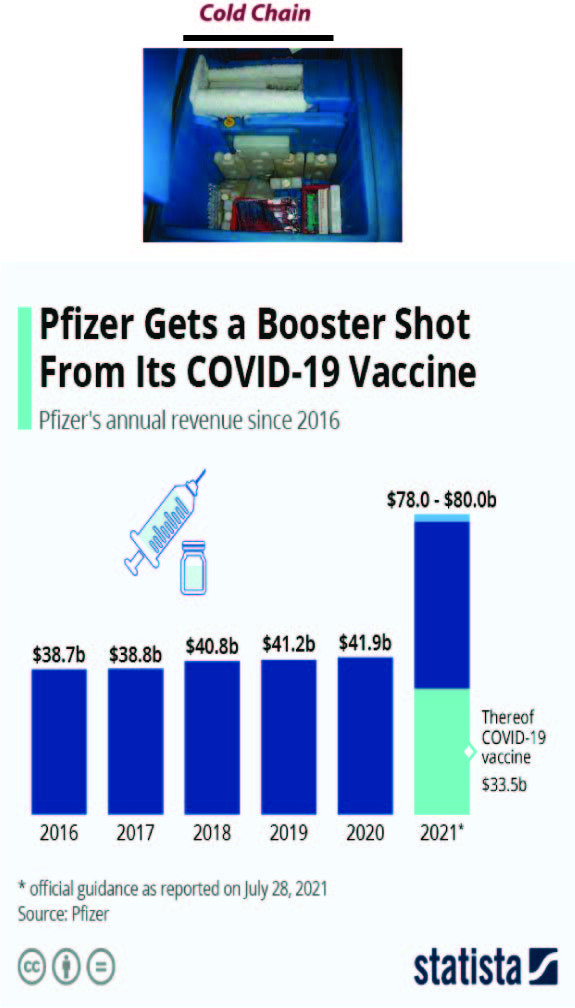
Existing amenities are not enough to store, and deliver a large volume of vaccines within a short time, say experts. The governments are considering banking on the existing cold chain as a supply chain and logistical issue for storing, transporting, and distributing coronavirus vaccines while some professionals say the main challenge will be to manage such a large volume with the existing capacity. On November 5, 2020, the Bangladesh government signed a trilateral memorandum of understanding (MoU) with the Serum Institute of India and Bangladesh’s Beximco Pharmaceuticals Ltd to get three crore doses of Covid-19 vaccines from Serum, keeping in mind the existing cold chain. In 2020 during the COVID-19 pandemic, vaccines being developed may need ultra-cold storage and transportation temperatures as cold as −70 °C (−94 °F), requiring what has been referred to as a “colder chain” infrastructure. Disruption of a cold chain due to war may produce consequences similar to the smallpox outbreaks in the Philippines during the Spanish–American War. The distributed vaccines were inert due to a lack of temperature control in transport. There are no uniform global practices to follow, customs, legal, and compliance issues, effects on the environment, supplier-related risks, issues with cold chain delivery — packaging, hardware issues, vehicle breakdown, etc. Besides the usual elements of risk that plague normal supply chains, cutting-edge cold chain logistics has its own exclusive set of problems such as product sensitivity, the increasing cost of freight, and growing regulatory hurdles.

Supply Chain Management (SCM) involves designing, planning, executing, controlling, and monitoring supply chain activities to increase value, build infrastructure, leverage logistical needs, supply and demand, and measure performance globally. SCM integrates with logistics, procurement, operations management, and information technology. Bonded warehouses are secure areas where dutiable goods are stored without duty payment, managed by the state or private companies. Special Economic Zones (SEZs) are bonded logistical parks with trade arrangements over specific geographic areas, under customs supervision, and integral to the global supply chain.
You must be logged in to post a comment.
Thank you for the auspicious writeup. It in fact
was a amusement account it. Glance advanced to far introduced
agreeable from you! By the way, how can we be in contact?