Abstract
Supply chain management (SCM) is undergoing a profound transformation driven by digitalisation, geopolitical uncertainty, sustainability pressures, and evolving market volatility. By 2026, supply chains are no longer evaluated primarily on efficiency and cost minimisation but on their ability to sense, adapt, and recover from disruption. This article examines the major emerging trends shaping supply chain management in 2026, including agentic artificial intelligence, intelligent control towers, regionalisation strategies, ESG-driven traceability, automation, cybersecurity, and workforce transformation. The analysis highlights a fundamental shift from forecast-centric planning toward decision intelligence and resilience-oriented supply chain design in the emerging trends in supply chain management.
Keywords: Emerging Trends in Supply Chain Management
Introduction
Over the past decade, global supply chains have faced unprecedented disruption from pandemics, geopolitical tensions, climate-related events, and rapid technological change. Traditional linear and efficiency-driven supply chain models have proven inadequate in managing systemic uncertainty. As a result, emerging trends in supply chain management in 2026 is increasingly characterised by adaptability, intelligence, and network-based coordination rather than scale-driven cost efficiency.
This article explores the key emerging trends shaping supply chain management in 2026 and explains how these trends are redefining strategic priorities, operational models, and managerial competencies.
Agentic Artificial Intelligence and Autonomous Decision-Making
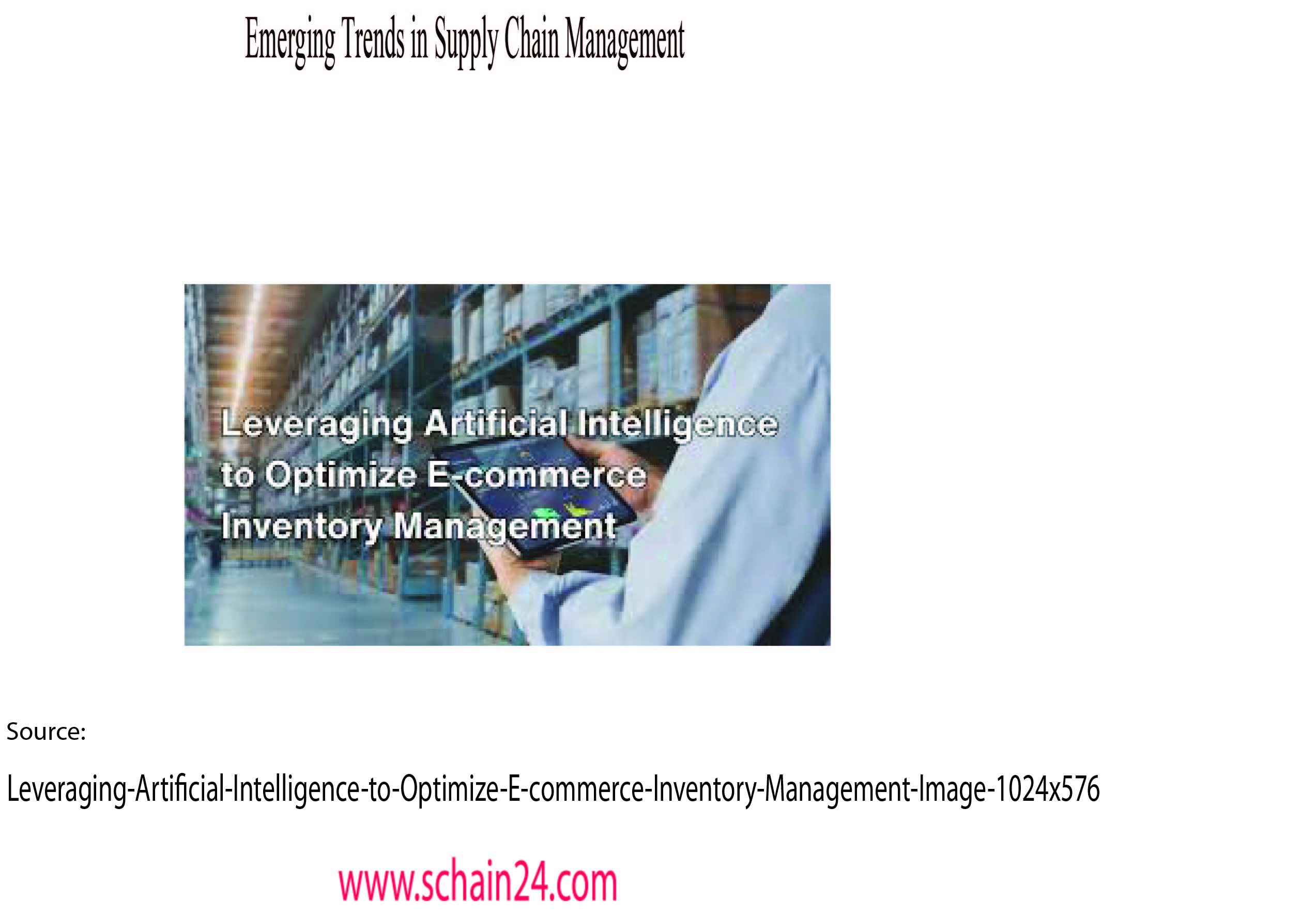
One of the most significant developments in 2026 is the rise of agentic AI in supply chains. Unlike earlier analytics tools that focused on descriptive and predictive insights, agentic AI systems are capable of autonomous decision-making. These systems continuously monitor demand, supply, logistics capacity, and risk indicators, and can automatically execute actions such as rerouting shipments, adjusting safety stock levels, or renegotiating supplier allocations. These are emerging trends in supply chain management of 2026 and beyond.
This transition reflects a broader shift from human-led planning cycles to machine-supported continuous decision-making. Human managers increasingly focus on governance, exception handling, and strategic judgment, while AI handles high-frequency operational decisions.
Evolution of Control Towers into Orchestration Hubs
Supply chain control towers have evolved beyond visibility dashboards into integrated orchestration platforms. In 2026, emerging trends in supply chain management advanced control towers combine real-time data, AI-driven recommendations, and execution capabilities across procurement, manufacturing, and logistics.
These orchestration hubs enable end-to-end coordination across multi-tier supplier networks, supporting faster response to disruptions and improved cross-functional alignment. Rather than merely reporting disruptions, modern control towers actively recommend and trigger corrective actions, reinforcing supply chain resilience.
From Forecast Accuracy to Decision Intelligence
Traditional demand forecasting, which emphasised accuracy as a primary performance metric, is increasingly viewed as insufficient in volatile environments. By 2026, organisations prioritise decision intelligence—the ability to evaluate multiple scenarios, assess trade-offs, and choose optimal actions under uncertainty.
Digital twins and scenario-based planning tools allow firms to simulate supply chain responses to shocks such as port closures, supplier failures, or demand surges. The focus has shifted from predicting a single future to preparing for multiple plausible futures.
Regionalisation, Nearshoring, and Friend-Shoring
Geopolitical fragmentation and trade policy uncertainty have accelerated regionalisation strategies. In 2026, firms increasingly adopt nearshoring and friend-shoring to reduce exposure to concentrated geographic risks. While global sourcing remains important, supply chains are being redesigned as regional networks supported by selective global linkages.
This trend reflects a strategic trade-off between cost efficiency and resilience as emerging trends in supply chain management. For critical industries such as electric vehicles, semiconductors, healthcare, and food systems, continuity of supply has become as important as unit cost reduction.
ESG Integration and End-to-End Traceability
Environmental, Social, and Governance (ESG) considerations have moved from voluntary reporting to operational enforcement. In 2026, regulatory requirements and stakeholder expectations demand product-level traceability and verified sustainability data across Tier-2 and Tier-3 suppliers.
Supply chains increasingly integrate carbon accounting, ethical sourcing metrics, and compliance monitoring into procurement and supplier selection decisions. ESG performance now directly influences access to markets, financing, and strategic partnerships.
Automation and Cybersecurity as Structural Requirements
Automation across warehouses, factories, and transportation networks has become a baseline capability rather than a competitive advantage as emerging trends in supply chain management. Robotics, autonomous material handling, and smart manufacturing systems address labour shortages while improving speed and accuracy.
At the same time, cybersecurity has emerged as a critical supply chain risk. As supply networks become more digitally interconnected, firms in 2026 treat supplier cyber resilience as a core component of risk management, integrating cybersecurity audits and secure data-sharing architectures into supplier governance.
Workforce Transformation and Human–AI Collaboration
The role of the supply chain professional is being redefined. Routine analytical tasks are increasingly automated, while human expertise is redirected toward strategic planning, stakeholder coordination, and ethical decision-making. Continuous upskilling in data literacy, systems thinking, and risk management has become essential.
Rather than replacing human judgment, advanced technologies augment decision-making, creating a hybrid model of human–AI collaboration.
Tariff Escalation and Cost Inflation
Renewed tariff policies—particularly in the United States, China, and parts of the European Union—have directly increased the cost of raw materials, intermediate components, and finished goods. Tariffs in 2026 function as embedded taxes within multi-tier supply chains, compounding cost impacts as goods cross borders multiple times. Empirical trade simulations suggest that tariff increases lead to significant reductions in export volumes and employment, particularly in cost-sensitive and labor-intensive sectors (Gabriel et al., 2025).
Furthermore, firms increasingly report front-loading and stockpiling behaviors to avoid anticipated tariff hikes, which raises inventory holding costs and distorts demand forecasting. These dynamics contribute to short-term logistics congestion and long-term cost volatility.
Compliance Costs and Administrative Burdens
Beyond direct price effects, tariffs in 2026 have substantially increased non-tariff operational costs. Firms face intensified scrutiny related to rules of origin, tariff classification, valuation methods, and documentation accuracy. According to global trade compliance surveys, documentation volumes and inspection frequencies have increased markedly, narrowing execution windows and raising the risk of shipment delays and penalties (Thomson Reuters, 2025).
These compliance burdens disproportionately affect small and medium-sized enterprises (SMEs), which often lack the digital trade infrastructure or legal expertise required to manage complex tariff regimes efficiently.
Supply Chain Reconfiguration and Regionalization
Cost and tariff pressures have accelerated nearshoring, friend-shoring, and regional supply chain strategies. While these approaches reduce tariff exposure and geopolitical risk, they often involve higher unit production costs due to labor, energy, or regulatory differences. Consequently, firms must balance cost efficiency against resilience and political risk, redefining traditional low-cost sourcing paradigms.
In strategic industries such as semiconductors, governments increasingly exchange tariff concessions for domestic investment commitments, reshaping global production footprints and increasing capital intensity (Reuters-style trade analyses, 2026).
Strategic Implications for Supply Chain Management
In 2026, effective supply chain management requires firms to treat tariffs and costs as dynamic strategic variables rather than static constraints. Leading organizations are investing in total landed cost modeling and scenario analysis, AI-driven tariff classification and compliance automation,multi-sourcing and dual-country production strategies,cross-functional coordination between supply chain, finance, and public policy teams.These capabilities enable firms to respond proactively to tariff shocks rather than react defensively.
Conclusion
Supply chain management in 2026 represents a decisive departure from traditional efficiency-driven paradigms. Emerging trends point toward intelligent, resilient, and ethically accountable supply chains capable of operating under persistent uncertainty. Organizations that successfully integrate AI, regionalized sourcing, ESG accountability, and workforce transformation will be better positioned to sustain competitive advantage in an increasingly complex global environment. Cost and tariff-related challenges in 2026 underscore a fundamental shift in global supply chain logic. Efficiency-driven globalization has given way to a model emphasizing resilience, compliance, and geopolitical adaptability. Supply chain competitiveness increasingly depends on an organization’s ability to anticipate policy shifts, absorb cost shocks, and redesign networks accordingly. As tariffs persist as a policy tool, supply chain managers must evolve into strategic risk managers operating at the intersection of economics, politics, and operations.
References
1.https://youtu.be/L05Kmu9HYPc?si=XotZImrMv0n80Yl2
2.https://rumble.com/v763gv8-emerging-trends-in-supply-chain-operation-a-perspective-in-2026..html
3.https://www.peakoutsourcing.com/blog/leveraging-artificial-intelligence-to-optimize-e-commerce-inventory-management/
4.Aghaei, R., Kiaei, A. A., Boush, M., Vahidi, J., Barzegar, Z., & Rofoosheh, M. (2025). The potential of large language models in supply chain management: Advancing decision-making, efficiency, and innovation. arXiv. https://arxiv.org/abs/2501.15411
5.Anumula, S. K. (2025). Design-based supply chain operations research model: Fostering resilience and sustainability in modern supply chains. arXiv. https://arxiv.org/abs/2511.01878
6.Gartner. (2025). Gartner predicts half of supply chain management solutions will include agentic AI capabilities by 2030. Gartner Press Release.
7.Nagamori, H., & Nishimura, K. (2025). The impact of regulatory shocks on global mineral supply chains. arXiv.
World Economic Forum. (2024). Global supply chains under geopolitical stress.
OECD. (2024). Trade policy uncertainty and global value chains.