

Introduction:
LDCs are countries with poverty, human resource weakness, and economic vulnerability. Which conditions and criteria are reviewed by a UN and Social Council (ECOSOC) committee every three years. In International trade LDCs get some tariff and market access facilities.
Canada is also providing some tariff and market access facilities to the LDCs,which includes many third world countries including Bangladesh, a country in the South Asian region. Hope the following narratives will discuss about custom aspects of the
Canada is also providing some tariff and market access facilities to the LDCs,which includes many third world countries including Bangladesh, a country in the South Asian region. Hope the following narratives will discuss about custom aspects of the
market access initiatives, which could be beneficial to exporters, importers and people handling customs related issues in Bangladesh, as well as other LDCs and other areas of the world especially related to Canada Economy.
Bangladesh can be treated as an exemplary country in the LDCs and Canada as an exemplary first world country, who provides similar (not same) facilities to the LDCs.
A Global Consensus:
There is a global consensus that economic development & growth can help to decease poverty. Starting from February, 2002, Canada government was exploring the idea to give greater access to their economy. Which would reduce poverty among the poorest countries. Promote investment and development; enhance economic development through reduced trade barriers and greater market access to Canada economy.
 |
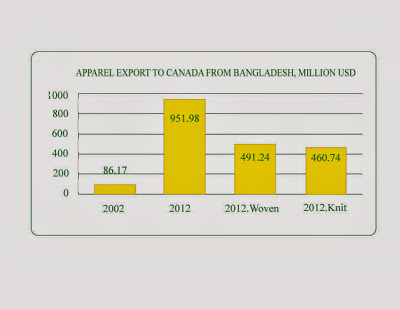
| Woven and Knit Export to Canada from Bangladesh |
List of Least Developed Countries, which are entitled for duty free treatment in the alphabetic order:
Afghanistan
Angola
Bangladesh
Benia
Bhutan
Burkino Fasso
Burundi
Combodia
Cape Verde
Central African Republic
Chad
Chomoros
Congo, Democratic Republic of
Djibouti
Equatorial Guinea
Eritrea
Ethiopia
Gambia
Ginea Bisau
Haiti
Kiribati
Lao Peoples Democratic Republic
Lesotho
Liberia
Madagascar
Malawi
Maldives
Mali
Mauritania
Mozambique
Nepal
Niger
Rwanda
Samoa,Western
Sao Tome and Principe
Senegal
Sierra Leone
Solomon Islands
Somalia
Sudan
Tanzania, United Republic of
Tongo
Tuvalu
Uganda
Vanuatu
Yemen Republic of
Zambia
Bengali Version:
Note:Please read the second part of the article also for easy understanding.

people thought supply and management is boring or its relate to jsut ware house.however thats not true its a fast growing industry and there are so many relate to this job and many universities offering spcial course for supply and management
Hi Mr.Fahad ,
Firstly , thanks for read the article and visit our Supply Chain Management blog.
You are correct that so many business related issues are intertwined due to cross-functional drivers of Supply Chain e.g.,Information,Sourcing and Pricing.
Our next article is "Market Access Initiative for the less developed countries (LDC) and related Issues: A Canada perspective (Part-2)", you are cordially welcome to read this also.
Great post. Finding ideas to write about is one of the hardest things about running a blog. Please visit http://goo.gl/9tORgb